
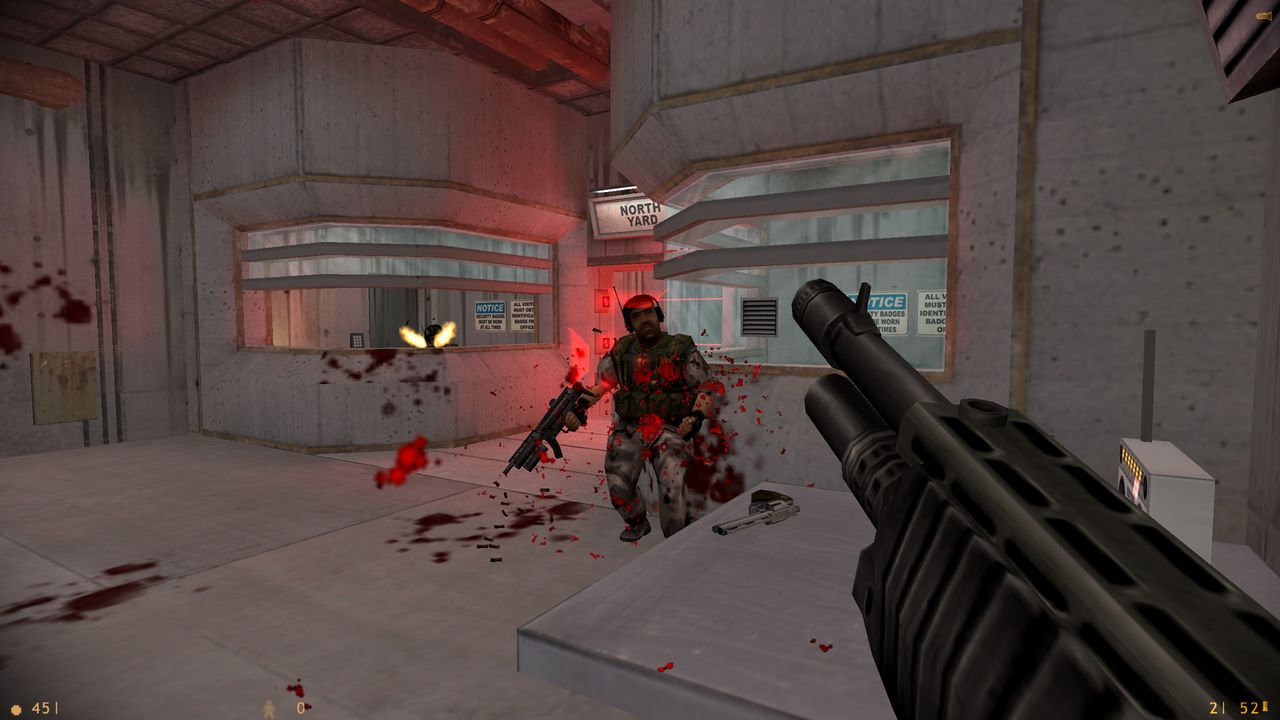
- Game: Half-Life
- Developer: Valve
- Original Release Date: November 19, 1998
- Metacritic Score: 96
Recent discussions surrounding the accessibility of classic titles have reignited interest in how League of Legends, LoL, and Riot Games titles compare to the portability of legacy hardware like the Nokia N95. In our coverage at In Game News, we have observed a growing trend of enthusiasts attempting to bring the 1998 masterpiece Half-Life to mobile platforms that were never intended to host such high-fidelity 3D experiences. This report examines the technical feasibility and community-driven Half-Life mobile port news 2026 as users continue to push the boundaries of vintage mobile hardware.
The Technical Reality of Half-Life on Mobile
When analyzing the possibility of running Half-Life on hardware from the mid-2000s, one must consider the original engine's requirements. Developed by Valve, Half-Life was a pioneer in the shooter and action genres, setting a benchmark with a 96 Metacritic score. While modern smartphones handle these assets with ease, the Nokia N95, released in 2007, represents a significant hurdle for the GoldSrc engine. The device was designed for multimedia consumption rather than intensive 3D rendering, making the prospect of a functional port a matter of extreme optimization rather than standard compatibility.
The core challenge in determining how to play Half-Life on Nokia N95 involves overcoming the limitations of the Symbian operating system. Unlike modern Android or iOS environments, Symbian lacks the robust graphics APIs required for efficient 3D acceleration. Consequently, those attempting to run the game often rely on custom-compiled versions of the engine that strip away non-essential graphical features to maintain a playable state.
Performance Metrics and Hardware Limitations
When assessing Half-Life running on Nokia N95 performance details, the results are often inconsistent. The device relies on a dual-CPU setup, which, while advanced for 2007, struggles with the physics calculations inherent in the GoldSrc engine. In our analysis of current community projects, we have noted that frame rates rarely remain stable during combat sequences involving multiple NPCs or complex environmental geometry.
Furthermore, the memory constraints of the Nokia N95 limit the amount of texture data that can be loaded into the active cache at any given time. This leads to frequent stuttering and long loading times between map segments. For those curious about the specifics, here is a breakdown of the technical challenges faced by developers working on this niche porting effort:
- CPU Bottlenecks: The processor struggles to handle the AI pathfinding logic of the original game.
- RAM Constraints: Limited system memory forces the engine to discard assets, resulting in visual pop-in.
- Input Latency: The translation of mobile keypad inputs to traditional WASD movement introduces significant delay.
- GPU Limitations: The lack of hardware-accelerated shaders forces the software to rely on CPU-based rendering, which is significantly slower.
Input Methods and User Experience
A primary question for those interested in this project is is it possible to play Half-Life with mouse and keyboard on Nokia N95. The answer is yes, through the use of external Bluetooth adapters or wired USB-OTG workarounds, though the experience is far from native. Because the game was designed for PC, the interface is inherently tied to high-precision input devices. Mapping these controls to the limited physical interface of a 2007 mobile device requires substantial configuration of the game's configuration files.
We have documented that while the game can technically register these inputs, the lack of native driver support for gaming peripherals in Symbian often results in "ghosting" or unresponsive command sequences. This makes the game exceptionally difficult to play at higher difficulty levels, where precision is required to survive encounters with the game's diverse enemy roster.
Contextualizing the 2026 Mobile Gaming Landscape
The pursuit of running Half-Life on a Nokia N95 is less about practical gaming and more about testing the limits of historical hardware. As we look at the current state of mobile gaming, it is clear that the industry has moved toward cloud streaming and highly optimized mobile-first titles. You can find more information on how current titles compare in our mobile gaming coverage.
Valve has not provided official support for these legacy experiments, and most of these ports are community-driven projects that exist in a legal grey area. For players who wish to experience the game as intended, the PC, macOS, Linux, PlayStation 2, and Dreamcast versions remain the definitive ways to play. Further analysis of how these platforms maintain their relevance can be found in our classic gaming archives.
Frequently Asked Questions
Can you run Half-Life on 2007 mobile hardware like the Nokia N95?
While the Nokia N95 features a dual-processor architecture, running Half-Life requires significant emulation or porting efforts that push the device's 2007-era hardware to its absolute limits.
Is it possible to play Half-Life with mouse and keyboard on a Nokia N95?
Playing with a mouse and keyboard on the Nokia N95 is technically possible through peripheral adapters, though the interface is not natively optimized for the original mobile operating system.
What are the performance details of Half-Life running on a Nokia N95?
Performance on the Nokia N95 is highly variable, often resulting in low frame rates and significant input latency due to the limitations of the Symbian OS and the device's mobile chipset.
Gabe Newell and the Secret History of Half-Life’s Sierra PartnershipAction
Elon Musk Considered 'Freeman' for OpenAI: The Half-Life Connection (...Action
Classic Half-Life Zombie Survival Mod Launches on Steam in 2026Abiotic Factor
Deep Field Games Founder Criticizes Survival Genre: Abiotic Factor In...