
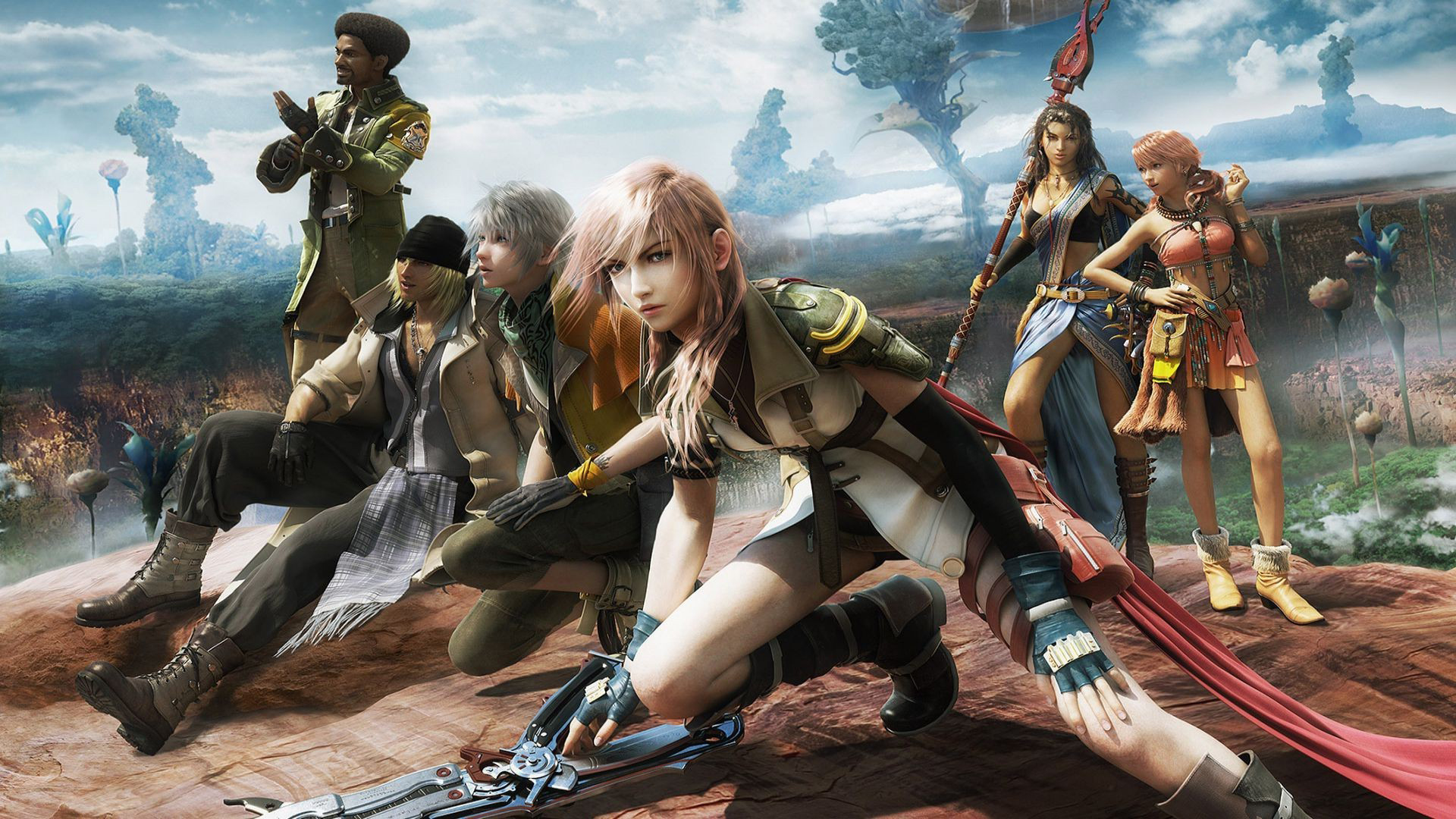
Director Naoki Hamaguchi, at the helm of Final Fantasy VII Remake, recently dropped a revelation that hits close to home for many of us veterans in the gaming space. He’s observed a significant shift within Square Enix’s new hires: an increasing number name Final Fantasy XIII as their favorite entry in the venerable franchise, eclipsing the traditional choices like Final Fantasy VI. This isn't merely Hamaguchi feeling "slightly old"; it’s a stark, generational marker that fundamentally shifts our understanding of the modern Final Fantasy player base.
For those of us who remember its original launch, Final Fantasy XIII, released in 2009 for Xbox 360 and PlayStation 3, was a massive moment. It wasn't just a visually stunning new chapter; it marked the franchise’s groundbreaking debut on an Xbox console, signifying a new era of accessibility and reach. We recall the buzz, the debates around its linear structure versus the more open-ended predecessors, and the sheer scale of its cinematic ambition.
Hamaguchi’s observation, while anecdotal, speaks volumes:
“The younger folk who come in don’t say Final Fantasy VI anymore, they say, oh yeah, Final Fantasy XIII was my favourite. So I really do feel the passing of the ages.”
Our analysis suggests this isn't just about nostalgia; it’s about lived experience. For a player coming of age in the late 2000s or early 2010s, FFXIII was their entry point. It represented cutting-edge graphics, a streamlined narrative focus, and a combat system that, while different, was undeniably engaging. The quality-of-life (QoL) improvements and cinematic flair, now standard in modern AAA titles, were revolutionary for many at the time.
Key Implications of This Generational Shift:
- Evolving Franchise Identity: This preference highlights how the "quintessential" Final Fantasy experience is no longer a static concept tied to the 16 or 32-bit eras. FFXIII's more guided, narrative-driven approach is clearly resonating with a new generation.
- Future Design Philosophy: Square Enix, like any major publisher, must cater to its evolving audience. Will this preference subtly, or even overtly, influence the design direction of future Final Fantasy titles, potentially favoring more cinematic linearity over traditional open-world exploration?
- Re-evaluation of FFXIII's Legacy: Long-debated by older fans, FFXIII might find its critical re-evaluation driven by its enduring popularity among a younger, fresh-eyed cohort. It suggests the game, despite its divisive elements, was a more successful "new beginning" for the series than some veteran players initially granted.
This isn't to say one era is inherently "better" than another, but it underscores a profound shift in what players value and what defines a "classic" Final Fantasy. For years, the community consensus often pointed to entries like VII, VI, or X. Now, a new contender has emerged from the modern era, compelling us to consider the changing landscape of gaming tastes. As senior editors, we believe this ongoing dialogue is crucial for understanding where this legendary franchise is headed.
Common Questions
- Why was Final Fantasy XIII considered so divisive at launch?
- Its highly linear structure for a significant portion of the game alienated some long-time fans who preferred more open-world exploration.
- Is Final Fantasy XIII playable on modern consoles?
- Final Fantasy XIII is backward compatible on Xbox One and Xbox Series X|S, but not natively available on PlayStation 4 or 5.
- Does this mean Square Enix will prioritize FFXIII's style for new games?
- While anecdotal, Hamaguchi's observation implies Square Enix's new talent has an affinity for FFXIII, which could subtly influence future design philosophies.