
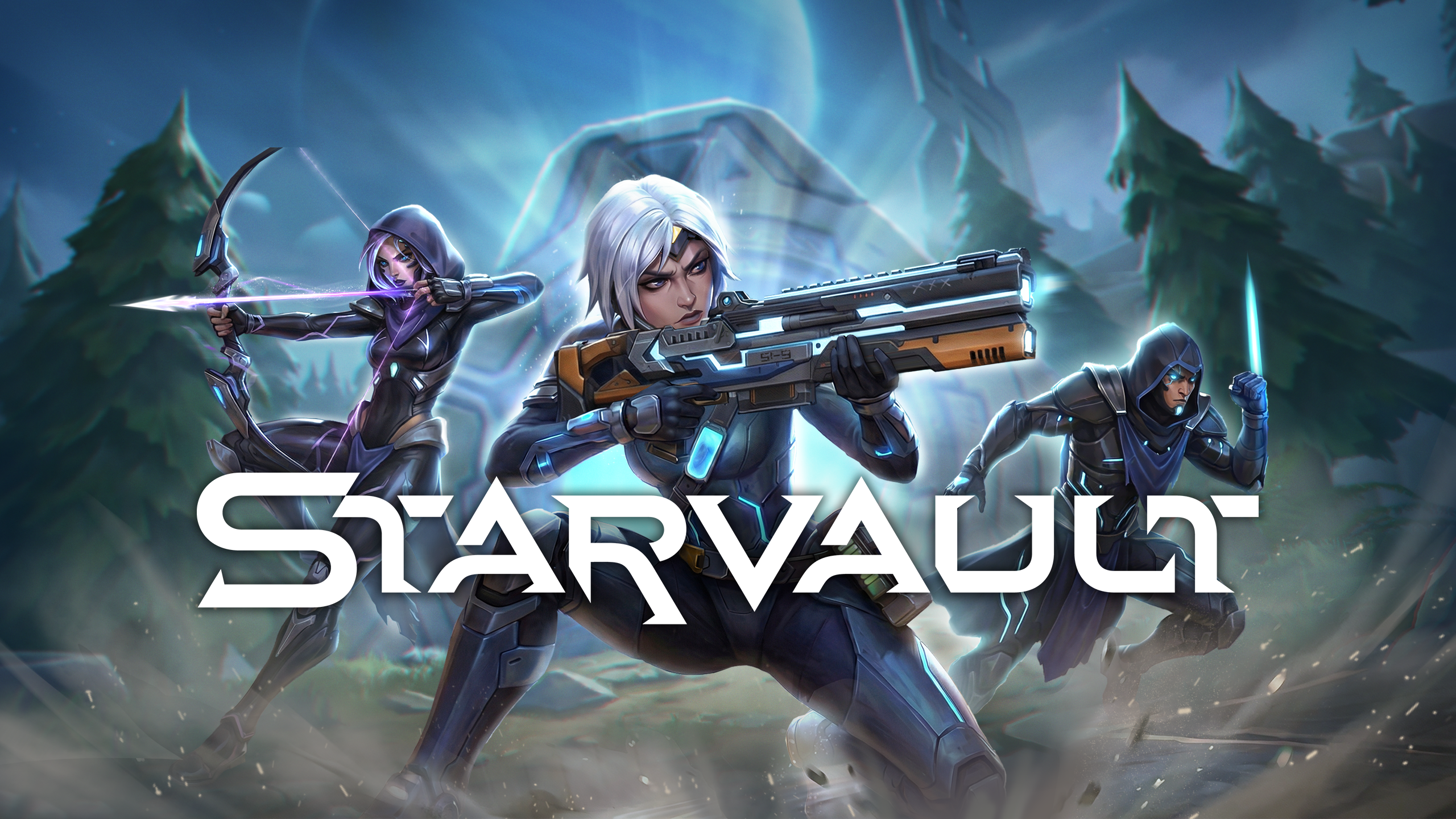
Sometimes a game catches you completely off guard. When I first played STARVAULT during its early access phase, I thought it was a polished curiosity. Fast forward a year, and I have logged more than thirty hours into the newly released SteamVR version in just two weeks. As someone who usually avoids the MOBA genre, I am surprised to report that developer Theia Games has crafted something genuinely special.
- Developer/
Publisher: Theia Games - Platforms: Meta Quest (Nov 27, 2025), SteamVR (June 25, 2026)
- Genre: First-person MOBA
- Price: Free to Play
Strategic Depth in First-Person
STARVAULT bills itself as VR's first true first-person MOBA, and the gameplay loop is as demanding as it is rewarding. The objective is standard—destroy the enemy base—but the execution requires constant micro-decisions. Between pushing lanes with your NPC 'Creeps,' securing Jungle Creeps for buffs, and navigating portals, there is always a tactical choice to be made. The standout feature is the Titan, a massive stone automaton that you can pilot to break enemy defenses. It is a high-stakes balancing act that rewards the team making the smartest moves rather than just the one with the best aim.
Hero Variety and Progression
The game currently features fifteen playable heroes, and this is where STARVAULT truly shines. While the game uses MOBA terminology, the actual moment-to-moment gameplay feels like a hero shooter. The roster is impressively diverse: you have airborne drones, blade-wielding assassins, and even mechs that utilize arm-swing locomotion. Best of all, every hero feels viable. I never encountered a character that felt overpowered or redundant, and the ability to customize your build with items and ability upgrades means that even your favorite hero can feel different from match to match.
Onboarding is surprisingly smooth, thanks to a hub world that allows you to test any character before unlocking them. While unlocking the full roster through gameplay requires a significant grind, there are no pay-to-win elements to be found. You can pay to accelerate progress, but it is entirely optional.
The Battle of Attrition
My main gripe with STARVAULT is match length. Because it is a strategy-heavy MOBA, games can easily stretch into the thirty-to-forty-minute range. For those of us squeezing in sessions during lunch breaks or tight windows of free time, this can be a hurdle. A smaller, faster-paced map designed for fifteen-to-twenty-minute matches would be a welcome addition.
Additionally, while the community seems healthy and the matchmaking is excellent at pairing players of similar skill levels, the bots—while competent—don't quite replicate the strategic coordination of human teammates. However, if you are looking for a deep, free-to-play competitive experience in VR, STARVAULT is an outstanding achievement.
- Exceptional hero variety and balance
- No pay-to-win mechanics
- Excellent onboarding for new players
- Matches can be overly long
- Bots are a poor substitute for human strategy
Mega Staraptor Is Dominating the Pokemon Champions MetaGame Updates
Pokémon Pokopia Events Guide: Current Schedule and How to Get RewardsGaming News
Tim Sweeney Pitches Unreal Engine 6 as the Antidote to Roblox’s DominAnalysis
Xbox Is Flailing: Why Industry Experts Are Questioning Microsoft’s St