
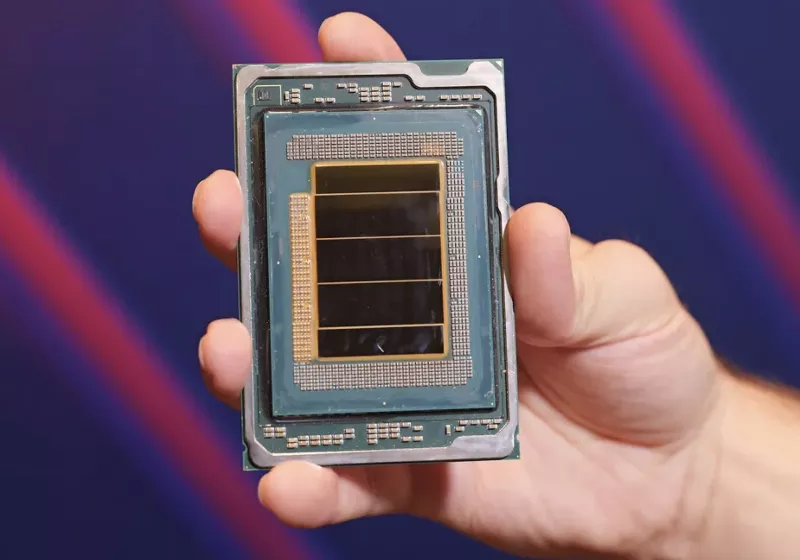
AMD appears to be expanding its high-performance mobile lineup. industry tipster Golden Pig Upgrade, the company is actively developing a new Zen 5 laptop processor equipped with 3D V-cache technology. The chip is currently identified by the tentative naming convention Ryzen 7 9800HX3D.
Quick Facts
- New Mobile Silicon: AMD is developing a Zen 5 laptop CPU featuring 3D V-cache.
- Tentative Branding: The chip is currently referred to as the Ryzen 7 9800HX3D.
- Enterprise Roadmap: CEO Lisa Su confirmed the Zen 7 'Florence' Epyc processors will arrive in 2028, followed by Zen 8 'Ravenna' in 2030.
- Infrastructure Growth: AMD has officially begun shipping its Helios rack systems for AI data center applications.
Strategic Focus on AI and Processing
The development of the 9800HX3D comes as AMD doubles down on both consumer and enterprise hardware. While the mobile gaming market looks toward the potential performance gains of 3D V-cache in a laptop form factor, the company’s enterprise division is shifting toward long-term architecture cycles. During a recent keynote, Lisa Su outlined a clear roadmap for data center growth, confirming that the Zen 7 'Florence' chips are on track for a 2028 launch, with the Zen 8 'Ravenna' architecture slated for 2030.
This hardware push aligns with the recent commercial rollout of AMD's Helios rack, which the company debuted at its Advancing AI event in San Francisco. The hardware, designed for high-end AI workloads, serves as a primary focus for the company's current enterprise strategy.
Implications for PC Gamers
For PC enthusiasts and laptop gamers, the potential introduction of an affordable 3D V-cache mobile chip marks a significant development. By bringing the technology—which has historically provided substantial gaming performance boosts on desktop platforms—into the mobile space, AMD could offer a distinct performance tier for high-end gaming laptops. While specifics on availability and final specifications for the Ryzen 7 9800HX3D remain limited to current leaks, the project suggests a continued commitment to maximizing CPU cache capacity across its mobile product stack.