
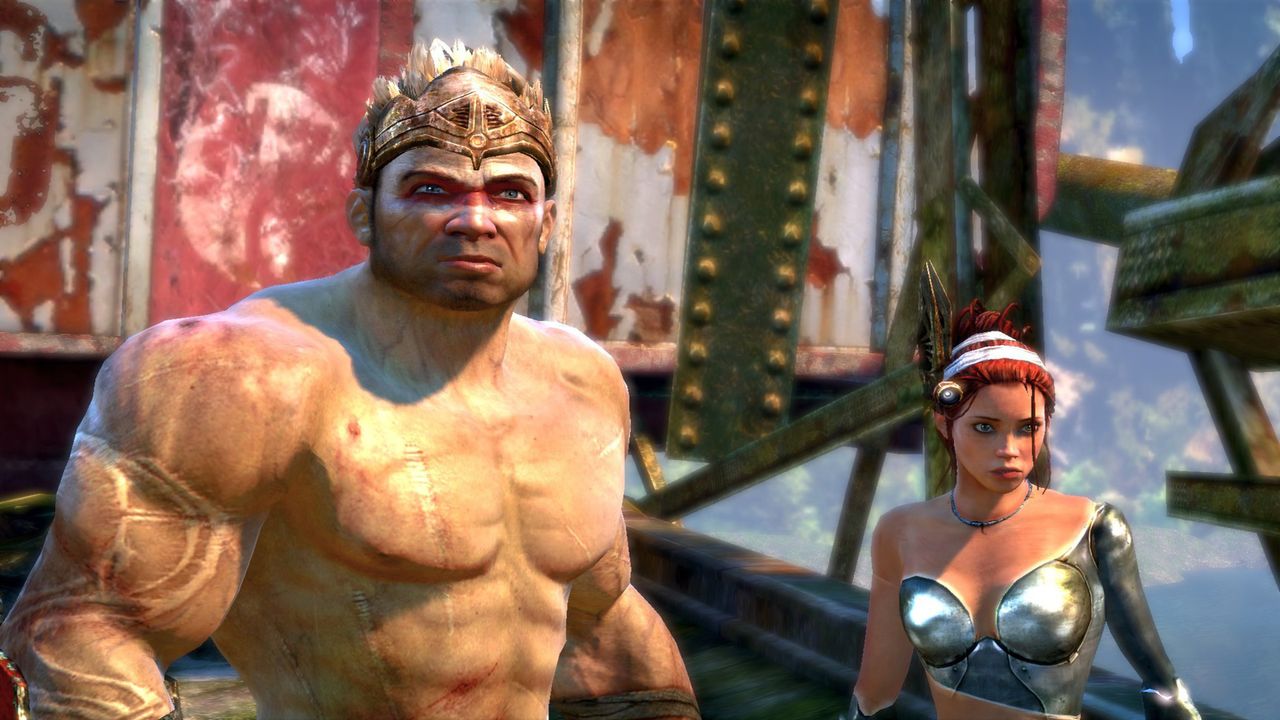
Years after its original release, Enslaved: Odyssey to the West continues to stand out as a rare example of a story-led game that prioritizes narrative consistency above all else. While it draws loose inspiration from the classic Chinese literature Journey to the West, the game quickly establishes its own identity as a journey across a ruined, overgrown America where humanity is no longer the dominant species.
- Developer: Ninja Theory
- Original Release: October 5, 2010
- Platforms: PC, Xbox 360, PlayStation 3
- Metacritic Score: 77
A Masterclass in Narrative Economy
The game’s success in storytelling is largely credited to the involvement of writer Alex Garland from the very beginning of development. By integrating the narrative with gameplay systems early on, Enslaved avoids the pacing issues that plague many story-driven titles. The premise is established with impressive speed: the tech-savvy Trip traps the protagonist, Monkey, with an electronic headband that forces him to escort her home. The stakes are immediate and personal—if Trip’s heart stops, the headband kills Monkey. This simple, effective hook gives the player a clear mechanical and narrative reason to keep their partner alive.
This design philosophy extends to the game’s HUD and world-building. Trip’s hacking skills explain the presence of health bars and sensor overlays, while a sequence involving a dragonfly mech serves as both a tutorial for camera mechanics and a way to build rapport between the two leads. It is a world that feels meticulously thought through, where the game’s internal logic remains congruous throughout the eight-hour journey.
Refining the Character-Driven Experience
Performance capture remains a highlight, with Andy Serkis delivering a physical performance that brings Monkey to life. His movement—from his athletic climbing animations to the primal, heavy-hitting combat—is consistent with a character defined by internalized rage and a tragic backstory. While the combat system is straightforward, it feels satisfying, utilizing the staff as both a melee and projectile weapon with weighty audiovisual feedback.
The game is not without its minor frustrations; occasional text prompts that spell out obvious actions can feel unnecessary. Furthermore, some players may find the platforming stiff. However, these choices are consistent with the character of Monkey, who acts as a capable, fearless climber rather than a desperate scavenger. The platforming serves the narrative pace, keeping the player moving toward the next story beat or away from immediate danger.
A Legacy of Design Thrift
Despite positive reviews, Enslaved: Odyssey to the West was a commercial disappointment upon its 2010 release. Yet, its influence is hard to ignore. The design thrift seen here—the ability to create a high-concept, polished experience on a shoestring budget—would eventually serve Ninja Theory well in future projects like Hellblade.
Ultimately, the game succeeds because it understands the virtues of collaboration. Just as the original Journey to the West focused on the bond between its travelers, Enslaved creates an uneasy alliance that blossoms into a meaningful relationship. In a landscape often cluttered with gray, brown, and yellow post-apocalyptic settings, the lush, overgrown environments of Enslaved remain a visual standout, proving that the end of the world doesn't have to be visually monotonous.