
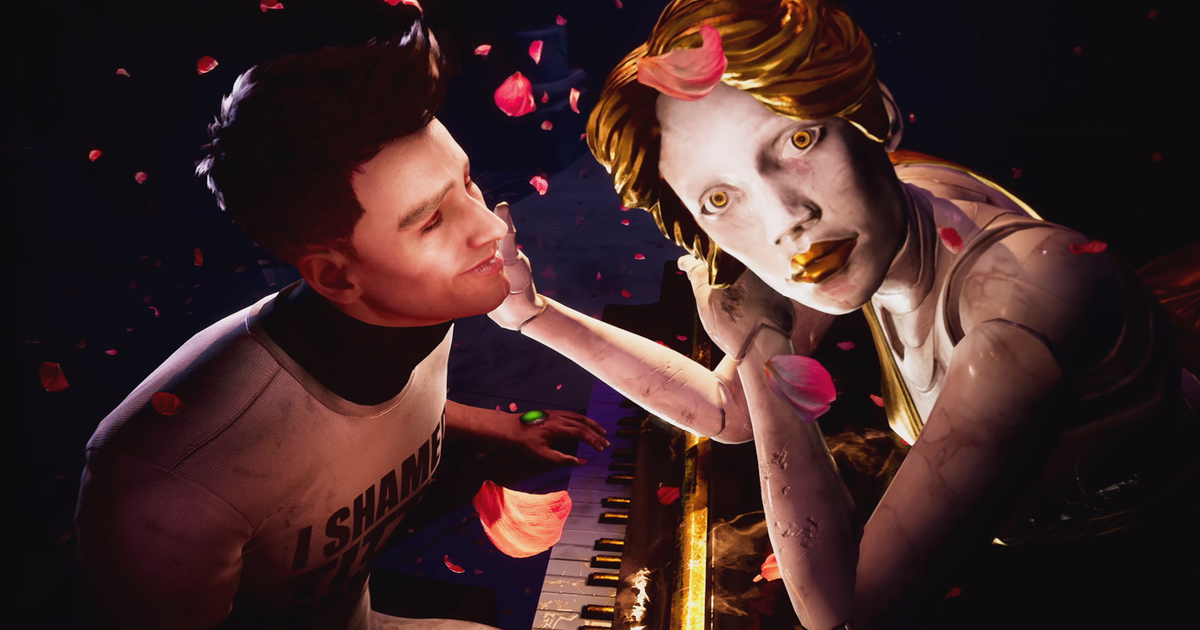
- Game: Judas
- Developer: Studio48
- Director: Ken Levine
- Primary Focus: Narrative-driven immersive sim
The upcoming release of Judas on platforms including the Nintendo Switch 2 and PC has sparked a conversation regarding the industry's obsession with graphical fidelity, specifically regarding why Ken Levine chooses to bypass photorealism in favor of stylistic longevity. As we look toward the 2026 release landscape, the discourse surrounding the Nintendo Direct events and the evolution of the Joy-Con controller has shifted from raw power to form factor and artistic intent. Ken Levine, the director behind the project, has been vocal about his preference for art direction over the pursuit of the latest and greatest technological benchmarks.
The Philosophy of Style Over Photorealism
For many years, the gaming industry has been characterized by a push toward increasingly realistic visuals. However, Levine argues that this pursuit is both financially inefficient and detrimental to the long-term viability of a title. In recent statements, he noted that the company has never prioritized ultra-realism, with the exception of SWAT 4. According to Levine, the reason BioShock remains visually appealing today is that it avoided the trap of trying to render every nut and bolt with hyper-realistic precision. Instead, the team focused on creating a cohesive style that would not age poorly as hardware capabilities improved.
This approach directly informs the development of Judas. The team at Studio48 is not attempting to leverage the latest graphical hardware to reach the peak of photorealism. Instead, they are concentrating on the structural integrity of the narrative and the artistic identity of the game world. Levine suggests that the industry is hitting a point of diminishing returns regarding graphical upgrades, a sentiment that is echoed in the hardware strategy of current platforms.
Hardware Trends and Diminishing Returns
The shift in hardware development, such as the release of the Nintendo Switch 2 and various iterations of the Steam Machine, signals a broader industry trend. These devices are not necessarily marketed as massive technological leaps in raw processing power. Instead, they focus on form factor and the user experience. Levine points out that this aligns with his view that developers do not need to be on the bleeding edge of technology if they have the right art director and a clear, intentional approach to visual design.
This perspective is essential for understanding the development cycle of Judas. While the game has been in production for several years, the time spent has not been focused on pushing graphical limits. The development effort has been concentrated on the complex, narratively-flexible systems that define the immersive sim experience. For more on how developers are navigating these hardware shifts, see our industry trends coverage.
Complexity in Narrative Engineering
The core of Judas involves a generation ship where the player must navigate the competing interests of three distinct factions. The game is designed to shift and change based on player choices, leading to divergent paths that move away from a traditional linear narrative. Levine likens this structural complexity to the work seen in Baldur's Gate 3. He emphasizes that the challenge is not technological in terms of CPU intensity, but rather a massive engineering and organizational task.
To manage this, the team must handle a vast array of branching tree structures and combinatorial game conditions. The work involves:
- Organizing complex asset libraries.
- Tagging individual objects and environmental elements.
- Monitoring minor game conditions to trigger reactive events.
- Managing combinatorial conditions based on player faction support.
This labor-intensive process is what defines the development of Judas. It is a game built on systems that respond to the player, requiring a significant amount of thought and management rather than a reliance on high-fidelity rendering. This focus on systemic depth is a hallmark of the immersive sim genre, a topic we have explored in our immersive sim coverage.
Why Ken Levine Avoids Realistic Graphics in Judas
The decision to avoid photorealism is a calculated move to ensure the game remains relevant for years to come. Levine’s experience with previous titles has taught him that graphical fidelity is a moving target. By choosing a distinct art style, the developer ensures that the game’s visual identity is tied to its artistic vision rather than the limitations or capabilities of the hardware available at the time of its 2026 release. This ensures that the aesthetic remains consistent regardless of the platform on which it is played.
Furthermore, the focus on narrative flexibility requires a massive amount of internal organization. If the team were simultaneously trying to push the limits of photorealistic rendering, the development burden would likely be untenable. By prioritizing style, the team is able to allocate more resources to the branching narrative and the reactive systems that make Judas a unique experience.
The Future of Immersive Sims
As the industry continues to evolve, the debate between visual fidelity and artistic style will likely persist. However, the success of titles that prioritize complex systems and unique aesthetics suggests that players are increasingly valuing depth over raw graphical power. Judas serves as a case study for this philosophy, demonstrating how a studio can build a deeply reactive world without needing to chase the latest graphical benchmarks. For the team at Studio48, the challenge is not in the rendering of a single frame, but in the management of the thousands of potential outcomes that a player might encounter during their journey on the generation ship.
Frequently Asked Questions
Why does Ken Levine avoid realistic graphics in Judas?
Ken Levine avoids photorealistic graphics in Judas because he believes such visuals are expensive to produce and do not age well compared to a distinct, intentional art style.
What is the visual art style of Judas 2026?
The visual art style of Judas prioritizes artistic direction over photorealistic fidelity, following the philosophy that a strong aesthetic remains timeless while high-fidelity assets quickly become obsolete.
Is Judas using photorealistic graphics for PC?
No, Judas does not utilize photorealistic graphics, as the development team at Studio48 focuses on narrative complexity and asset organization rather than pushing the absolute limits of graphical hardware.