
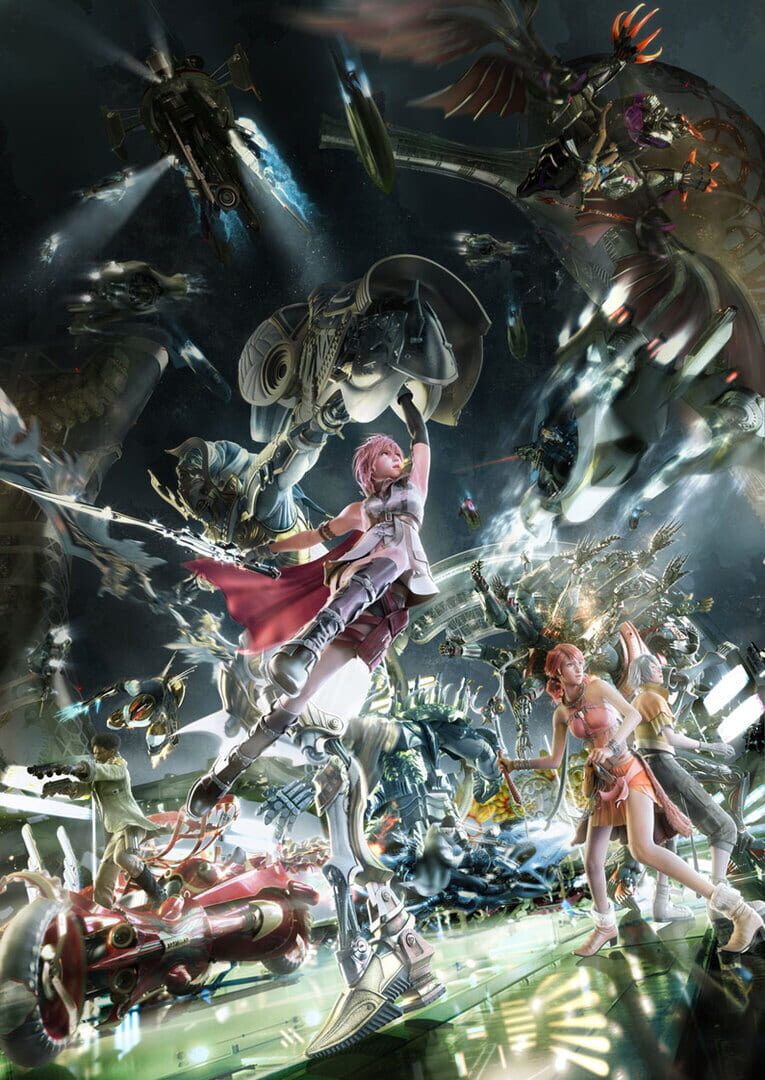
Technically, the Xbox 360 era was often labeled the dark age of the JRPG. Despite that, a handful of titles shone bright enough to cut through the noise, offering experiences that held players' attention despite the genre struggling for mainstream footing at the time. Among these is Final Fantasy XIIIa game that, while divisive, provides a surprisingly addictive loop once you move past its initial hours.
The Evolution of Combat
Final Fantasy XIIIreleased by Square Enix on March 9, 2010, is a prime example of a game that rewards patience. The combat system can feel dull at first, acting as a slow trudge for the uninitiated. However, as the hours tick by, the game opens up. Once you gain full control over Paradigms, role setups, and the Crystarium, the battles morph into a lightning-fast, thrilling experience.
Because the game does not allow you to pause to input commands, you are forced to think on the fly. Boss encounters are particularly intense, requiring players to balance health management with a constant focus on the enemy's stagger meter. Reading enemies mid-fight and planning your approach is a blast, especially as the challenges ramp up in the second half of the game, where the world expands beyond its initial corridor-heavy design.
Finding the Hidden Gems of the 360 Era
While Final Fantasy XIII captures that specific addictive quality, it sits alongside a broader collection of Xbox 360 JRPGs that defined the generation. Lost Odysseyfor instance, remains an underrated classic with a unique system where immortal characters learn from human party members, allowing for massive customization. Similarly, The Last Remnant attempted to innovate with a group-based combat system that emphasizes morale and unit positioning over individual actions.
Other titles focused on pure mechanics: Resonance of Fate introduced a bizarre, gun-fu style combat system that remains unmatched in the genre, while Star Ocean: The Last Hope mastered the art of high-stakes, flank-based combat. Even Enchanted Armsan early title from FromSoftware, utilized a grid-based system and a Golem-collection mechanic that functioned as a more mature take on creature-collecting games.
Whether it is the narrative-driven shifts in Nier or the generation-spanning choices in Record of Agarest Warthe 360 era offered a surprisingly dense library for those willing to look past the genre's temporary decline. Final Fantasy XIII serves as a reminder that even the most polarizing entries can offer deep, satisfying systems if you give them the time to breathe.