
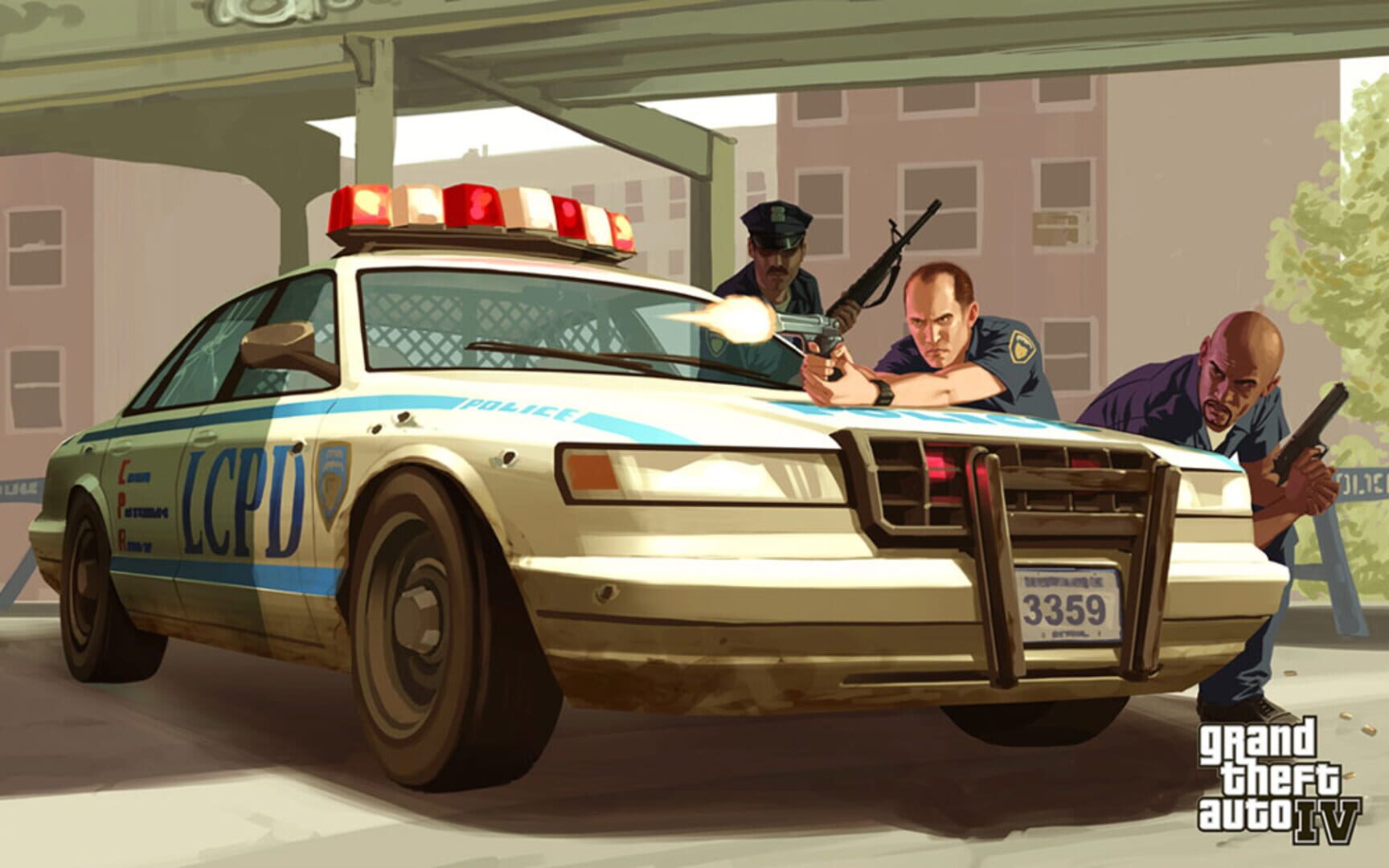
Technical Foundations and Design Philosophy
Released in 2008, Grand Theft Auto IV marked a distinct shift in the franchise's trajectory, prioritizing technical fidelity and grounded character interactions over the sheer scale seen in previous entries. The title is perhaps best remembered for its integration of NaturalMotion’s Euphoria engine, which introduced procedural character animation to the open-world genre. This technology allows for dynamic physics reactions, meaning characters respond to environmental impacts and combat in ways that were considered highly advanced for the era. Unlike the sprawling maps of its predecessors, the game features a land area roughly one-quarter the size of Grand Theft Auto: San Andreas, opting for a denser, more detailed urban environment that emphasizes verticality and intricate street-level interactions.
Core Gameplay Mechanics and Social Systems
Beyond its physics-driven combat and movement, the game introduced a relationship system that requires players to manage social activities with in-game friends. This mechanic forces players to balance criminal objectives with the maintenance of personal connections, adding a layer of simulation to the traditional open-world loop. While some critics at the time noted that the smaller map size felt restrictive compared to the vastness of San Andreas, the consensus remains that the trade-off resulted in a more cohesive and visually dense experience. The driving physics and damage modeling also received significant attention, providing a weightier feel to vehicle navigation that remains a hallmark of the title's identity.
- Release Year: 2008
- Animation Tech: NaturalMotion Euphoria procedural system
- Map Scale: One-quarter the size of San Andreas
- Social Mechanics: Integrated in-game friend relationship system
- Platform: Originally launched on Xbox 360
For players interested in the evolution of the series, Grand Theft Auto IV serves as a bridge between the arcade-style chaos of the early 3D era and the more cinematic, physics-heavy design philosophy that followed. The focus on a singular, dense urban environment ensures that every street corner feels intentional, even if the total landmass is smaller than what long-time fans might have expected. The relationship system, while polarizing for some, remains a unique experiment in integrating social management into a high-stakes crime narrative. Ultimately, the game stands as a technical achievement that prioritized the realism of its physics engine and the depth of its character interactions over the breadth of its map.