
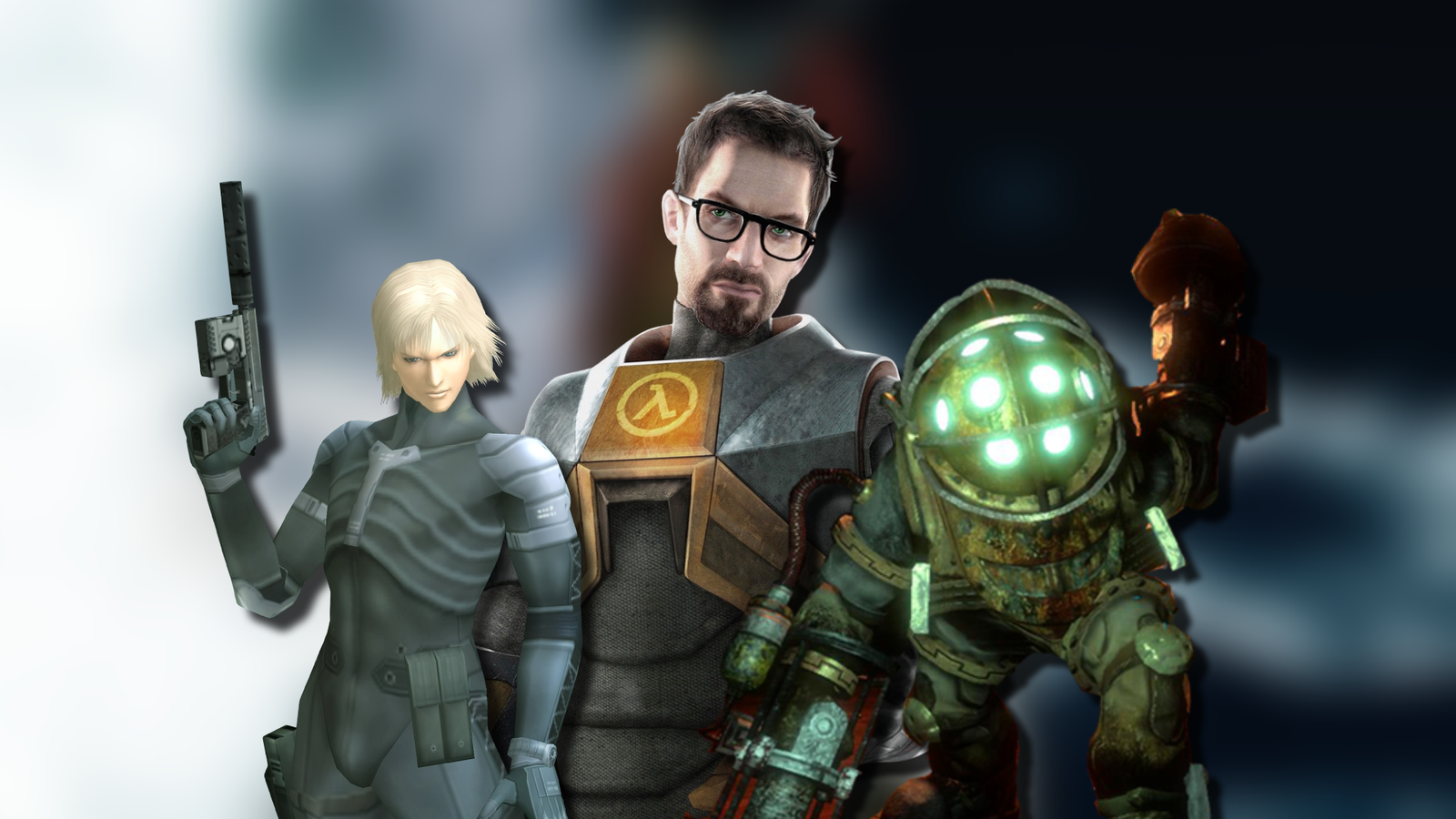
Video games have experienced numerous turning points throughout their history, including a series of transformations during the 2000s that gifted us with works whose influence remains palpable today. For those wondering why these 2000s games haven't been surpassed, it is worth looking at titles that continue to reign supreme in their respective fields.
Dragon Ball Z: Budokai Tenkaichi 3: An Arena Fighting Benchmark
Arena fighting games have become an increasingly neglected subgenre as the industry shifts toward traditional, meta-based online play. Released on November 9, 2007, for PlayStation 2 and Nintendo Wii, Dragon Ball Z: Budokai Tenkaichi 3 remains a product of an era with different priorities. Developed by Spike and published by Namco Bandai and Atari, the game stands out for its refined controls and a staggering character roster that holds up nearly 20 years later.
While the title has received a recent successor, it remains the pinnacle for many fans. Its appeal is rooted in having the most varied game modes of the franchise, and it continues to ignite passion among anime fans who find today's competitive-focused titles to be lacking the nuances that characterized this classic.
Need for Speed: Most Wanted: The King of Street Racing
Since the racing genre shifted almost entirely toward simulation, the arcade-style street racing of Need for Speed: Most Wanted has become a rarity. Released on November 15, 2005, across platforms including PC, PS2, Xbox, and GameCube, the game remains the gold standard for the genre.
Despite various attempts by EA and other developers to replicate its aura, the pursuit of the Blacklist remains the most adrenaline-pumping experience in racing. The game succeeded by aligning a specific set of stars: a splendid sense of speed, deep mechanical and aesthetic customization, and an iconic soundtrack. With a campaign that encouraged players to become the ultimate street racer, the game remains synonymous with millions of childhoods and is still waiting for a truly worthy successor.
Beyond these two classics, the 2000s produced other masterpieces that arguably haven't been topped, including:
- Mirror's Edge (2008): A platformer that popularized first-person parkour and remains unmatched in mechanical and aesthetic prestige.
- BioShock (2007): A defining FPS that established environmental storytelling and remains the top of the food chain in atmospheric, narrative-driven action.
- World of Warcraft (2004): A global cultural phenomenon that, despite two decades of evolution in the MMORPG genre, offers a world of scale and lore that remains uniquely legendary.
- Max Payne (2001): A third-person shooter that continues to best modern titles through its comic-book stylization and iconic slow-motion gunplay.
- Silent Hill 2 (2001): A psychological horror masterpiece that remains a time-ignoring nightmare, governing the psyches of fans even in the presence of modern remakes.
- Devil May Cry 3: Dante's Awakening (2005): A hack and slash title with combat choreography and character charisma that has not been displaced in two decades.
- Metal Gear Solid 2: Sons of Liberty (2001): An oracular stealth game that remains legendary for its critical reflections on the internet and artificial intelligence.
- Half-Life 2 (2004): Valve's quintessential shooter, which refined physics-based puzzles and varied gameplay sequences to a limit that no other FPS has dared to attempt.
Square Enix Details Battle Philosophy for Final Fantasy 14: EvercoldChico’s Delivery
Chico’s Delivery Review: A Mediocre Sliding Puzzle for XboxAction
Half-Life 2 and Portal Are Now Playable in Your Web BrowserCopa City
Copa City Review: A Football Management Sim That Struggles With Controls