
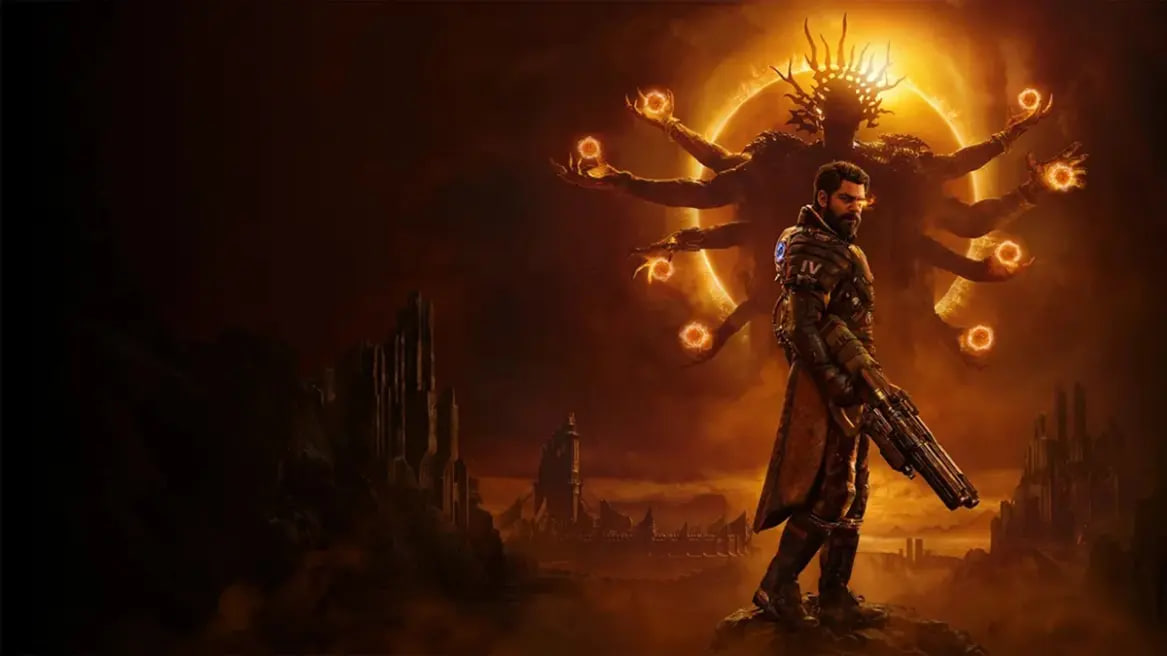
When Housemarque looked back at thirty years of development for their latest title, Saros, they decided to move past the incremental updates that defined their previous work. The result is Graphite, a unified engine framework built specifically for PlayStation 5 that replaces the studio's long-running NGP (Next-Gen Particles) system with a more capable, integrated architecture.
From NGP to Graphite
For over a decade, NGP served as the backbone for Housemarque’s visual identity, growing from a 2013 prototype for Resogun into the complex systems seen in Returnal. However, as the studio joined PlayStation Studios, they found that their toolset needed to match a new level of ambition. Graphite now brings GPU simulation, rendering, and Houdini integration under a single roof, allowing for more complex, reactive visuals.
Volumetric Fog: Low and High Frequency
In Saros, the team wanted fog to be a living, breathing element rather than a static background effect. To achieve this, they split the workload into two complementary systems:
- Low Frequency Fog: Designed for ambient atmosphere, this system uses a modified Unreal Engine froxel grid. By lowering the hysteresis coefficient to 50%—and employing blue noise jitter and depth clamping to manage aliasing—the team created fog that reacts instantly to player movement, projectiles, and explosions.
- High Frequency Fog: Used for specific story beats like the Prologue's smoky skull or narrative 'Mirages,' this system uses a custom ray marcher. It clusters scatter data into 8x8x8 voxel groups, skipping empty regions to maintain 60 FPS performance while allowing for high-fidelity detail in focused areas.
Houdini Integration and Real-Time Particles
The studio also overhauled how artists author effects. Previously, they relied on per-voxel expressions, which were difficult to control and computationally expensive. For Saros, they introduced a pipeline that uses Houdini to pre-compute data, which is then fed into a runtime point cloud rasterizer.
This is most visible during the player's spawn sequence. The game uses splines generated in Houdini as target positions for particles, which are then re-simulated in real time. This allows the player character to appear as if they are reforming from a viscous, shifting substance, with the system handling the transition from 'goo' to a solid character mesh seamlessly. Because these effects are simulated at runtime on the PS5, the team can randomize the process, ensuring that the spawn sequence looks slightly different every time the player wakes up.
By moving to a system where particles can be driven by external data while still reacting to in-game physics like player-character collision capsules, Housemarque has managed to keep their signature visual style while gaining the flexibility to create more complex, interactive environments.