
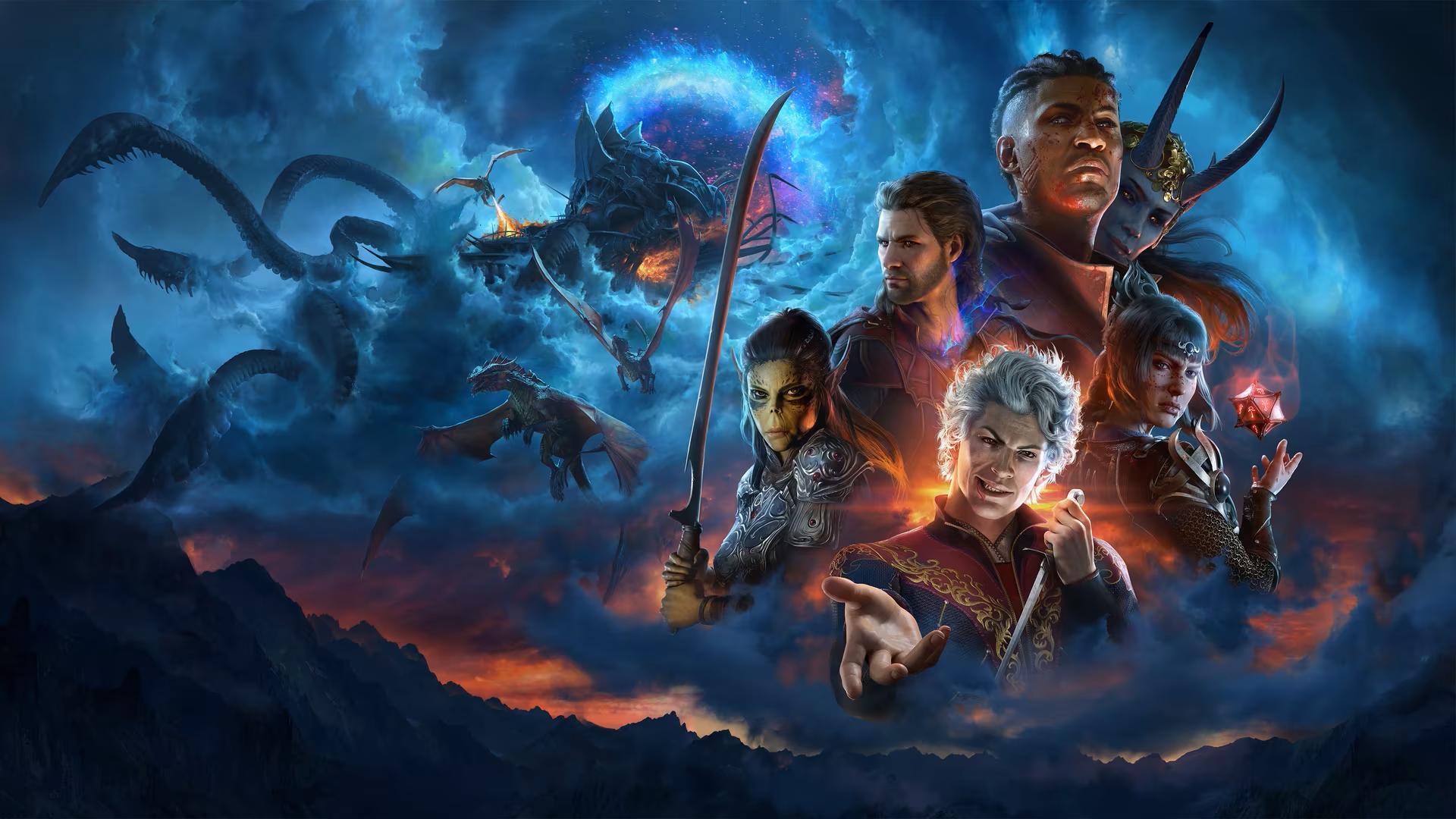
- HBO has officially announced a live-action TV series adaptation set in the world of Baldur's Gate.
- Crucially, the series is positioned as a direct "continuation to the games," taking place immediately after the events of *Baldur's Gate 3*.
- This immediate sequel approach raises significant concerns for veteran players due to BG3's unparalleled narrative branching, featuring approximately 17,000 variations of its final cutscene alone, and countless player-driven choices throughout its 100-hour journey.
- Showrunner Craig Mazin (co-creator of HBO's *The Last of Us* and *Chernobyl*) is tasked with defining a "canon" storyline for BG3, a move that could alienate large portions of the dedicated player base who cherish their unique playthroughs.
- The show will introduce new protagonists, with the extent of involvement for *Baldur's Gate 3*'s iconic companions (Wyll, Astarion, Lae'zel, etc.) currently unknown.
- Comparisons are drawn to other video game adaptations, particularly the *Fallout* series, which successfully navigated canonical issues by setting its story decades after game events, allowing for a more flexible interpretation of past choices.
The News: A Risky Proposition for Faerûn
Hold onto your +5 longswords, gamers, because HBO is officially bringing *Baldur's Gate* to the small screen. On the surface, the prospect of a big-budget, live-action D&D series set in one of the most iconic cities of the Forgotten Realms is incredibly exciting. Who wouldn't want to see the vibrant, dangerous streets of Baldur's Gate brought to life with HBO's renowned production quality?
However, the announcement, courtesy of Deadline, contains a line that immediately had us here at In Game News burying our heads in our hands: "The Baldur’s Gate TV series will be a continuation to the games, telling a story that takes place immediately after the events of Baldur’s Gate 3, as the characters — old and new — are dealing with the ramifications of the events in the third game."
The Canon Conundrum: When Every Choice Matters
This isn't a simple case of picking one of three color-coded endings like *Mass Effect 3*. *Baldur's Gate 3* is less a single story with a few different outcomes and more a colossal, interwoven narrative rope, thickening and lengthening with "every romance, argument, betrayal, and surprise you experience." The "ramifications of what events, exactly?" are the core issue. Was it the defeat of the Netherbrain? Its enslavement? Gale's self-sacrifice? These are just three of the many final outcomes, not to mention the "dozens and dozens of choices that you make on the way to that conclusion." We're talking approximately 17,000 variations of the final cutscene, folks.
To put it bluntly, every single player has their own deeply personal version of events. For some, Minsc and Boo are vital party members; for others, they're unknown NPCs. Shadowheart's path, be it escape from Shar or embracing the dark goddess, is a defining moment for many, completely unique to their playthrough. And let's not forget those chaotic souls whose journey was defined by succumbing to the Dark Urge, tearing limbs off wizards and letting goblins run rampant. How can a show possibly "deal with the ramifications" of such a profoundly player-driven experience?
The answer, of course, is that showrunner Craig Mazin must decide what choices are "canon." He must "set certain events in stone" to build his story. But in doing so, he inevitably invalidates countless hours and thousands of unique playthroughs. This isn't just about the ending; it's about the entire "100-hour journey up until that point, too."
The Fallout Precedent (and Why BG3 is Different)
This isn't the first time a major RPG with branching narratives has been adapted for television. The *Fallout* TV series, for instance, told a story set after *Fallout: New Vegas*, another RPG with multiple world-defining conclusions. But *Fallout* made smart choices:
- It's not a direct sequel to a specific game's plot, but rather set within the same universe.
- It introduces a significant time jump of over a decade, leaving the interim events a deliberate mystery.
This clever approach allowed *Fallout* to depict characters and factions without having to "join the dots" of specific game endings. The Legion might have been mighty in your *New Vegas* playthrough, but in the show, they've fallen to infighting over 15 years. You don't need to know how; it just happened. This method ensures "no one New Vegas ending is cemented as canon," allowing all player choices to exist, even if their ultimate outcomes didn't endure.
Even Larian Studios, the developer behind *Baldur's Gate 3*, understood the power of a time gap; BG3 itself is set over a century after *Baldur's Gate 2*, granting it immense creative freedom. By starting "immediately after the events of BG3," the HBO show surrenders this crucial luxury. It's forced to "make a choice. It has to invalidate thousands of playthroughs."
Our Take: Rolling a Critical Fail on the First Round?
None of this implies the show is guaranteed to be bad. With Craig Mazin's impressive resume—especially *Chernobyl*—and HBO's track record with fantasy, there's every chance it could be a fantastic show in isolation. However, it's incredibly difficult to maintain that isolation when the project explicitly continues a journey so many of us invested "hundreds, sometimes even thousands of hours" into.
The dilemma is stark: "purposefully keep things vague and potentially undercook the history of this world, or pick a defined canon that could alienate large portions of your viewership?" While HBO wants to attract new viewers, "why a direct sequel? Why take place immediately after a story that a portion of your audience has no investment in?" And for the other half, who experienced a different version of events, the outcome is the same.
"Anyone who does want a sequel wants a follow-up to their own experience, not Craig Mazin’s." The real lesson from successful video game adaptations like *Fallout* is that they thrive when "decoupled from existing stories." You can absolutely set a D&D show in Baldur's Gate, call it "Baldur's Gate," and reference certain events or characters from BG3. But to "purposefully shackle yourself to continuing the story of that game, rather than freely exploring its world, feels like purposefully rolling a critical fail on the first round of combat."
Common Questions
- How will the Baldur's Gate TV series connect to the games?
- The series is positioned as a direct 'continuation to the games,' taking place immediately after the events of *Baldur's Gate 3*.
- What concerns do veteran players have about the Baldur's Gate TV series?
- Veteran players are concerned about the show needing to define a 'canon' storyline for *Baldur's Gate 3*, which features unparalleled narrative branching and player choices, potentially alienating large portions of the player base.