
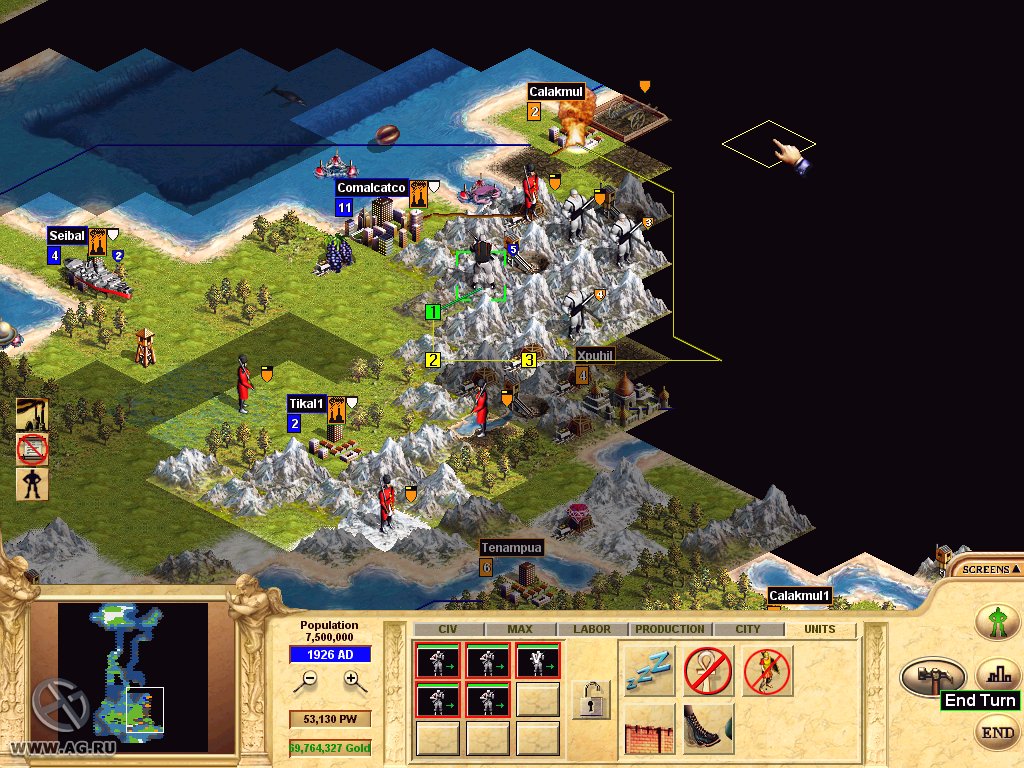
- Historical Milestone: Civilization: Call to Power (CtP) holds the title of the first Linux game ever sold at retail, launched by Loki Software in May 1999.
- Technical Oddities: Unlike other Loki ports, CtP used a bespoke installer emulating the Windows UI rather than the standard Loki Setup tool.
- Critical Mechanics: Introduced unit stacking (up to nine units), dedicated battle screens, and a multi-layered map featuring sea and space colonies.
- Stability Warning: While Patch 1.2 resolves a victory-screen freeze, it introduces new crashes during opening cinematics and random desktop kicks.
The "Black Sheep" of the Civ Family
In the world of 4X strategy, Civilization: Call to Power is a fascinately weird artifact. Developed without Sid Meier’s stamp of approval, it spent its life fighting for legitimacy while simultaneously trying to out-scope the main series. For those of us in the Linux community, however, it’s legendary for a different reason: it was the vanguard. When Loki Software brought this to market in '99, it wasn't just another port; it was a proof of concept for Linux as a viable retail gaming platform.
Our take? The game is a paradox. It’s cluttered with "futurology" that feels more like turn-of-the-millennium gimmicks than meaningful additions. Yet, the core remains solid enough to have spawned a sequel and a dedicated cult following that eventually kept the flame alive via the Apolyton Edition source code release.
High-Concept Ambition vs. UI Friction
CtP tried to reinvent the wheel, and sometimes that wheel came out square. We see this most clearly in the user interface. The game abstracts vital gameplay—city building, diplomacy, and world events—behind "staid menus" and unremarkable icon notifications. When you wipe out a rival power, the game barely blinks. Compared to its predecessors, the presentation feels buried, making the learning curve steeper than it needed to be.
Mechanical Wins: Stacks and Public Works
It’s not all menu-diving, though. Some of the QoL changes were actually ahead of their time:
- Unit Stacking: The ability to stack nine units and watch them go to work on a dedicated battle screen is a massive improvement over the "one-unit-per-tile" slog found in other entries.
- Public Works: The way the game handles infrastructure management remains one of the more praised systems among series veterans.
- The Map: Later ages split the map into three zones across two views, integrating sea and space colonies—though many players might find themselves winning the game before these features even come into play.
The Technical Verdict: Patch 1.2 is Mandatory (But Flawed)
Running this on a retro Linux rig is a bit of a minefield. If you’re playing on the base 1.1 version, expect the game to freeze immediately after the victory cinematic—talk about an anti-climax. Upgrading to the final 1.2 patch is a requirement, but it’s a "pick your poison" scenario. The update fixes the victory freeze but breaks the opening cinematic, causing the game to crash if you don't skip it. We also noticed inconsistent CD music toggling and frequent kicks to the desktop. Our advice: Save often.
Legacy and Availability
Despite the "lopsided" feel and the dated obsession with battle mechs and space lawyers, CtP’s influence persisted. The sequel, Call to Power II, eventually landed on Linux as well after its source was released in 2003. While CtP might be the "black sheep," its status as the first retail Linux game secures its spot in the digital hall of fame, even if the UI still makes us want to pull our hair out.
Common Questions
- What is the historical significance of Civilization: Call to Power for Linux?
- It holds the title of the first Linux game ever sold at retail, launched by Loki Software in May 1999.
- What unique mechanics were introduced in Call to Power?
- The game introduced unit stacking of up to nine units, dedicated battle screens, and multi-layered maps featuring sea and space colonies.
- Does Patch 1.2 fix all the stability issues in the game?
- Patch 1.2 resolves the victory-screen freeze but introduces new crashes during opening cinematics and random kicks to the desktop.